
(1992) Industrial Relations: The Year Ahead
It is difficult at the best of times to speak with certainty about the future. It is particularly difficult to do this with industrial relations at this time.

It is difficult at the best of times to speak with certainty about the future. It is particularly difficult to do this with industrial relations at this time.

Perhaps the most valuable role the Lloyd Ross Forum can play is to assist in the promotion of discussion within the labour movement and the wider community about the policy, strategic and practical options facing the union movement. What Should Unions Do? is an attempt to assist that discussion.
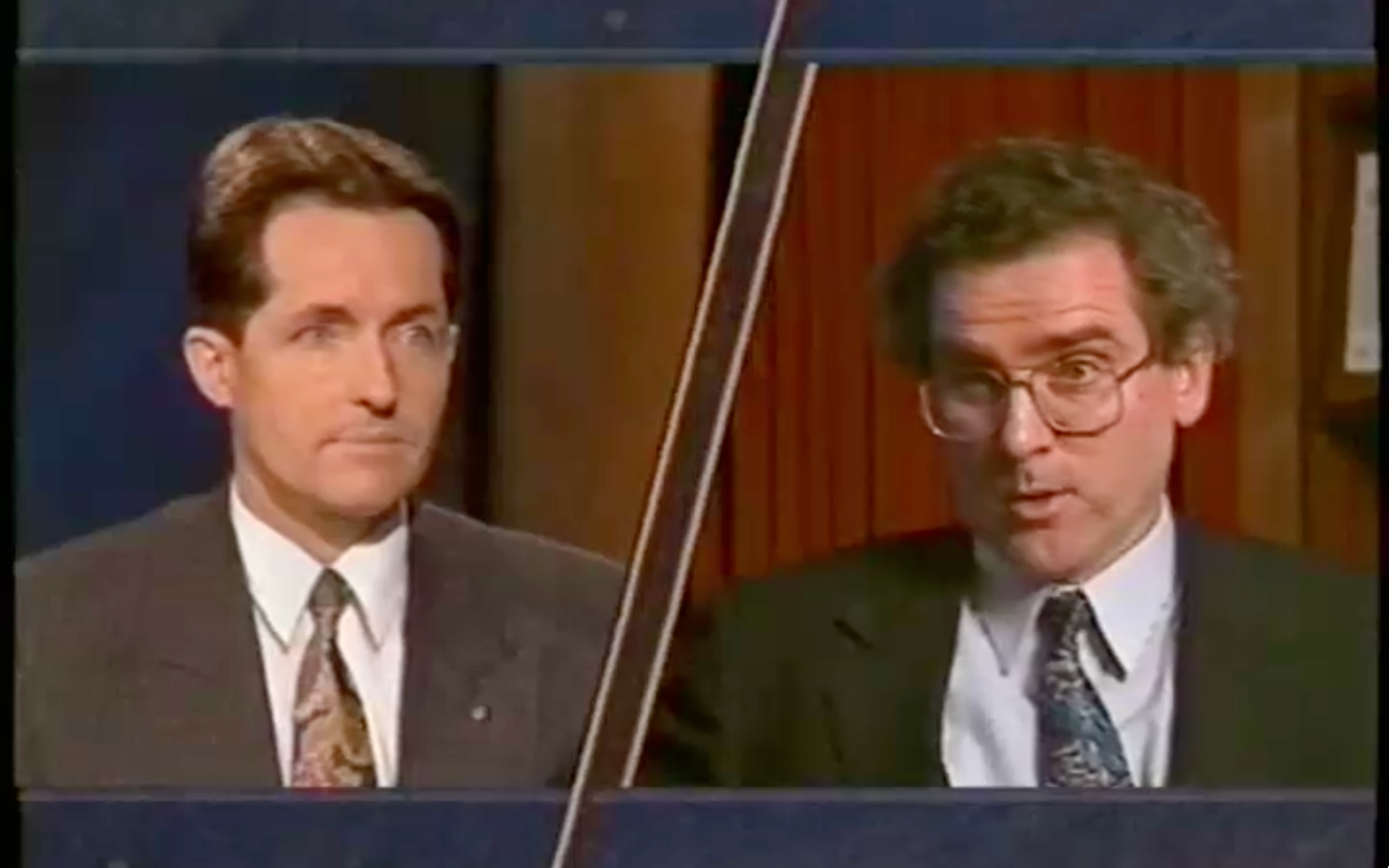
Interview/Debate with Quentin Dempster on the ABC television 7.30pm Report between Michael Easson, Secretary, Labor Council of NSW, and Garry Brack, Executive Director, Employers Federation of NSW.
When the subject of ‘what should unions do?’ comes up at union gatherings in Australia it is rare that the Japanese experience is seriously discussed. When the topic of Japanese labor unions is raised it is frequently in pejorative tones.

Last week’s ACTU Congress was a public relations disaster. The media reporting of the congress concentrated on the decline in the representation of workers by the union movement.

Prior to the major reforms undertaken in the 1980s under Labor, the accumulation of decades of regulation of the financial and import/export product markets effectively insulated Australian markets from external influences.

In order to conceptualise what might exist beyond the process of restructuring, one must firstly identify what exactly is being restructured.

I begin by thanking the State Chamber of Commerce and Industry for the opportunity to present a union point of view to this seminar. There is a need for seminars such as this one to ensure that all users of the NSW industrial relations systems are aware of the options created by the new Industrial Arbitration (Enterprise Agreements) Amendment Act, 1990.

Interview by Diane Hague with Michael Easson, Secretary, NSW Labor Council on October 31, 1991 about the NSW Industrial Relations Bill, published in Education: journal of the N.S.W. Public School Teachers Federation, Vol. 72, No. 18, November 11, 1991, pp. 10-11.
The Accord was originally negotiated between the then Federal opposition and the ACTU in March 1983 and it formed the basis for economic reform in Australia, once the Hawke Labor government was elected. For the first time in Australia’s history, traditional European concepts such as “corporatism” and “tripartitism” became central to the “economic jargon” of the period.