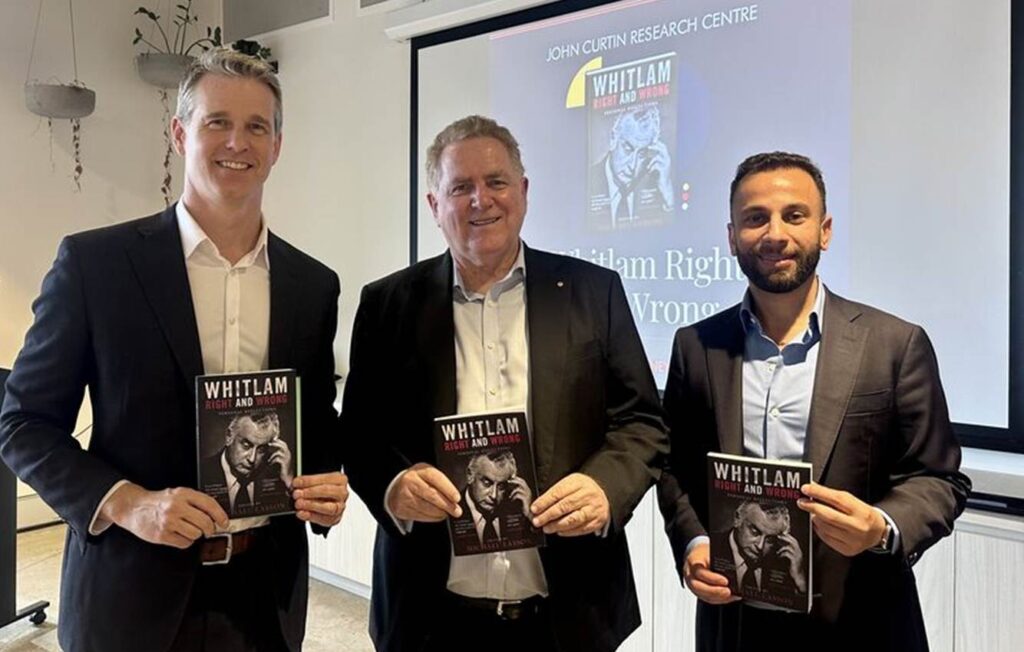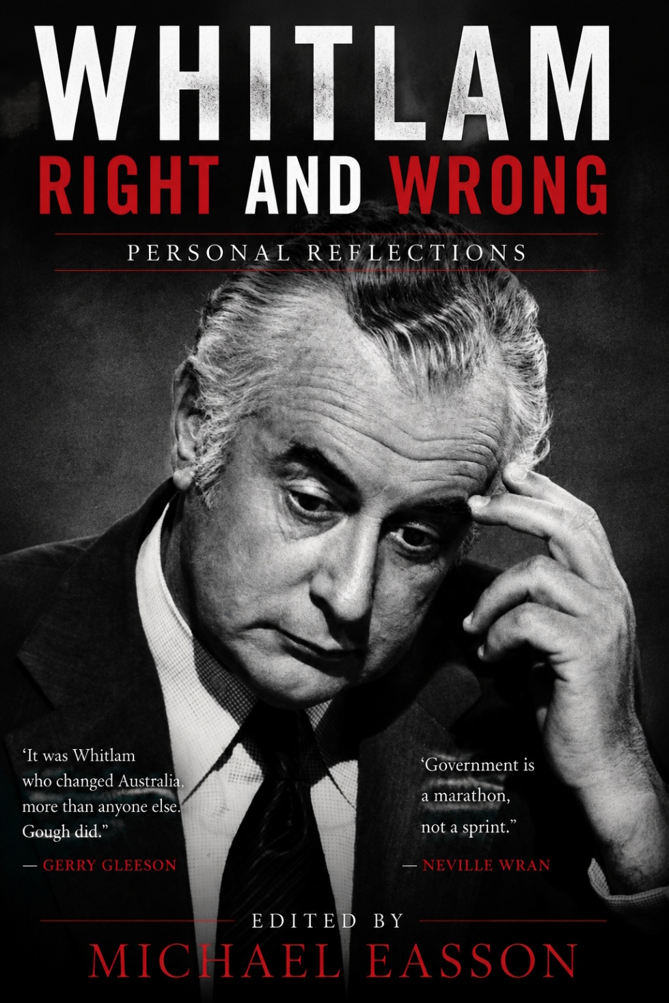
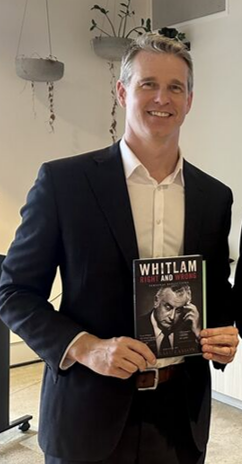
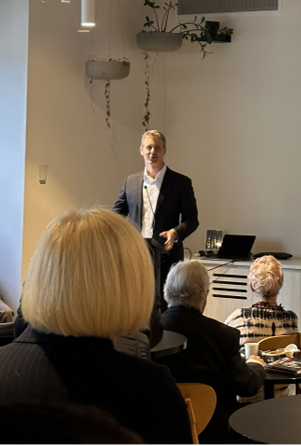
It was a splendid to be with old and new friends at the launch of the book Whitlam Right and Wrong. Personal Reflections, with Dr Andrew Charlton MP (his speech is below) doing the honours.
A “ghost from the past” (I hadn’t seen him in nearly forty years), Rod Wise, wrote a piece ‘Memoirs of a Labor Has Been’ and that prompted the book. He sent it to Anthony Cappello, the publisher of Connor Court Publications, and now Australian Solidarity Press, and he rang me to argue it would be a good essay to include in a volume on Whitlam.
Anthony Cappello deserves praise for his curiosity and prolific contribution to public debate and culture through the publication of works on all manner of topics. I am deeply honoured to call him a friend.
We deliberately agreed to look for contributors from outside the box, to ensure the collection was no hagiography and would include critics, fans, and deep analysis.
My siblings were present, Shane, Maree, and Karyn. With my wife Mary, we were “dewy-eyed Whitlamites” in our teenage years
Whether you are an undying fan or a critic of the Whitlam government, his influence reverberates still. In my view, Whitlam was the biggest character we’ve known, the most significant agent of change this land we’ve ever seen.
Impressed that each of the contributors composed interesting, provocative arguments. The authors evaluated Whitlam’s reforms, noted their resistance, the rupture of his undoing, and they ruminate on his impact.
Here are some quotes from the contributors:
“It was Whitlam who changed Australia, more than anyone else. Gough did.” – Gerry Gleeson AC.
Whitlam “was no longer mainly the martyr of 1975. As he became older, he became ever more venerable, associated more with a great transformation in Australian life he had helped bring about than with the chaos of his government’s demise. The government’s legislative record, achieved in just three years, was remarkable and enviable by later standards.” – Professor Frank Bongiorno AM.
“I have always believed that given time, with eighteen months left in office before the next election was due in 1977, the government may have turned things around.” – former Labor Senator, Michael Forshaw.
“I will always be a proud member of Gough’s Club – a club he opened for women as well as men.” – former Labor MP and minister under Bob Hawke & Paul Keating, Ros Kelly AO.
“No country in the world has a culture more universally respectful of people just because they are human beings than Australia.” – Dr David Kemp AC, former Malcolm Fraser adviser and minister under John Howard.
“As far as I am aware, Malcolm never imagined that Kerr would dismiss Whitlam until the last week.” – Ian Macphee AO, former minister under Malcolm Fraser.
“We just wanted Labor’s amateurs and union mates and camp followers and the Whitlam Hooray Club out of office and out of our lives.” – Dr Scott Prasser.
“The Whitlam government’s removal on 11 November 1975 by Governor General, Sir John Kerr, was …the culmination of three years of obstruction and harassment by forces that had never really accepted its election in December 1972.” – Michael Sexton SC.
“…neither Whitlam nor Kerr proved themselves to be the master tacticians they seemed to believe they were, leaving events to play out uncontrolled.” – Professor Anne Twomey AO.
“There are now… the Haves, the Have yachts, and the rest. …Today’s Australia …is a long way from the optimism that Whitlam Labor once promised in those stirring days of distant memory.” – Rod Wise, ex-Labor activist and former journalist.
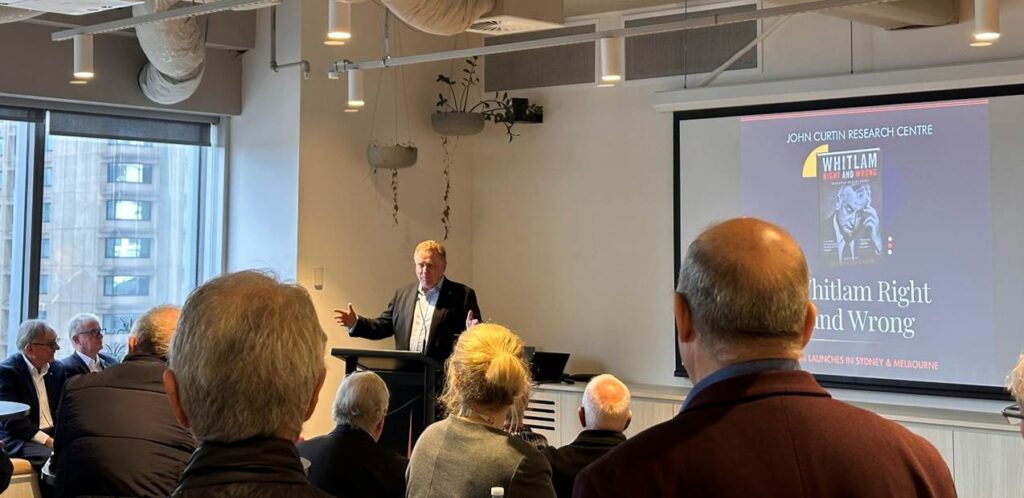
Andrew Charlton’s Speech at the Launch
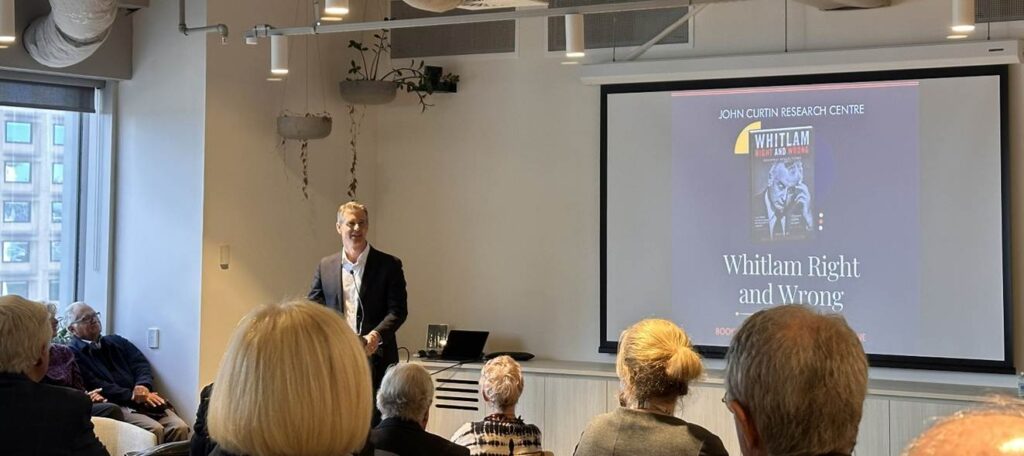
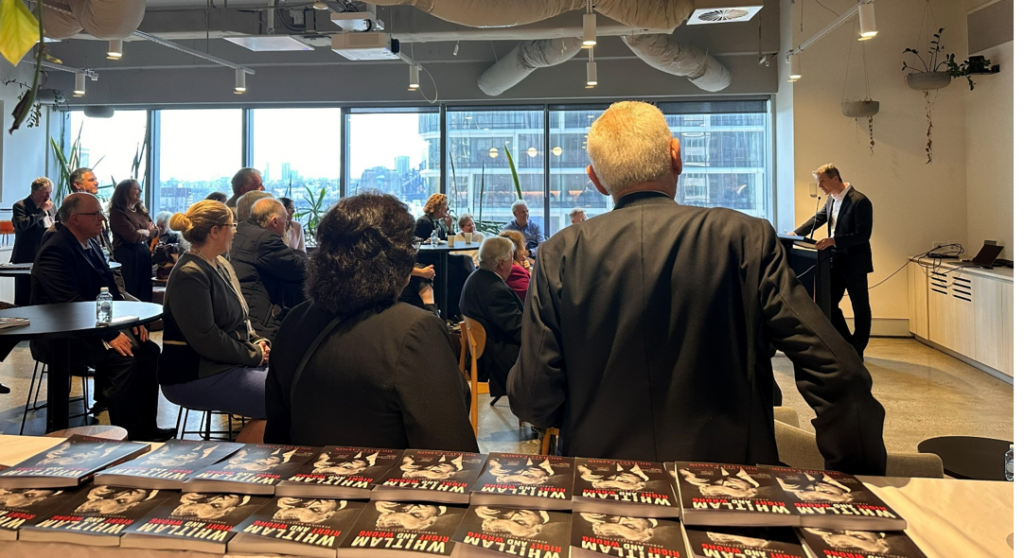
It’s a pleasure to be here at the launch of a book edited by my friend Michael Easson and contributed to by such a constellation of political heroes and luminaries that I have admired all my life.
I greatly enjoyed the book. But I have to say that when Michael asked me to speak, I had a bit of trepidation because this is the second speech about Whitlam, I’ve been involved with, and the first one didn’t go very well.
The first was in 2008, when I worked as a staffer for Prime Minister Kevin Rudd. One of our jobs was to give the Prime Minister the long list of speech requests and ask him which ones he wanted to do. On this day, he looked at the list and pulled one out. The “Whitlam Lecture.” “I want to do it,” he said.
So, we got our speechwriter to write a speech and gave it to the PM. By the time he got to read the draft, it was only a couple of days before the event. He read it and said: no, no, no. He wanted it to be more personal and more reflective of the contribution Gough had made to his generation of Australians.
So, we got a second speech written quickly and gave it to Rudd with just a day to spare. He read it, and …. he still wasn’t happy. He said: “Look, Gough is 92. He doesn’t go to many events anymore. This might be the last speech about him that he hears in his life. I want it to be a fitting tribute. I want to speak to him as the sitting Prime Minister and tell him about the legacy he leaves.”
So, with less than 24 hours to go, Rudd decided he’d write the speech himself. I went back to the lodge with him, and we stayed up late into the night.
This is what the PM handwrote and handed to me to type up on my laptop in the wee hours of the morning:
“There’s one Australian who owed you a great debt of gratitude. A kid who lived your dream that every child should have a desk with a lamp on it where he or she could study. A kid whose mum told him after the ’72 election that it might just now be possible for the likes of him to go to university. A kid inspired to study Chinese by your audacious and historic journeys to China. That kid was me. And more than thirty years after the Whitlam revolution, I am proud to stand before you as Prime Minister.”
It was a late night for both of us. We were exhausted. But Rudd had the speech he wanted, containing the words he wanted to say directly to his boyhood hero.
The next day, quite tired, we went through the day’s program and got on the plane to Sydney for the speech. We got off the plane and into C1, the Prime Minister’s car, and made our way to the venue: Rudd in the front, me in the back.
The Prime Minister turned his head half around and asked: “Has Whitlam arrived at the venue?”
“I’ll find out,” I said, and called the advancer on the scene. “Has Whitlam arrived?”
The advancer sounded confused. “What do you mean?”
“I mean, has the guest of honour arrived?”
The advancer said: “How much do you know about this event, Andrew?”
I said: “It’s the Whitlam Oration, organised by the Whitlam Institute. With Whitlam.”
He said: “No Andrew. You haven’t accepted an invitation from the Whitlam Institute. You’ve accepted an invitation from the Sydney Uni Politics Club to give a lecture to them on the topic of Whitlam.”
I said: “Mate. Please. Please just tell me Whitlam is coming!”
The advancer said: “No, Whitlam isn’t coming. But there are about forty nineteen-year-olds who are very excited to meet the Prime Minister.”
As I hung up the phone, Rudd asked again: “So — has Gough arrived?”
Not very bravely, I replied in a quiet voice: “No. Not yet.”
That night Prime Minister gave a beautiful speech. Whitlam did not hear it.
And it was all my fault.
As Michael says in his introduction, most of the people reading this book, including me, were not alive during the Whitlam government. I belong to the generation that didn’t experience Gough Whitlam. We don’t remember him, but we did inherit him. He was there in the Medicare card in my wallet, in the university I attended, in the Racial Discrimination Act, in the fact that Australia’s relationship with China existed. For my generation, Whitlam isn’t a memory. He’s the furniture of the country we grew up in.
So, my joy in reading this book was, in part, to learn. And not only did I learn about history, I took a lot of enduring political lessons from the book.
The first lesson is: know what you are in government to do.
Ros Kelly’s chapter captures this better than anyone. Ros describes being twenty-seven years old when Whitlam was dismissed. She heard the news, sat on the floor and cried, then got in the car and drove to Government House. But what stayed with her was not simply the anger of the Dismissal. It was, in her words, “the value of seeing what an ALP government could do if we were in power.”
That sentence should resonate with every Labor person. Whitlam made government feel consequential. Education. Health. The arts. Women’s equality. Indigenous rights. Australia’s relationship with Asia. The modernisation of the Labor Party itself. And the lesson for those of us lucky enough to serve in government today is that administration is not enough. You must be able to answer the question: what will be different about Australia because we were here?
The second lesson I took from the book is: ambition must be matched by economic credibility.
In his chapter, David Kemp comes at Whitlam from the other side of politics, and that is one of the strengths of Michael’s collection. David’s judgement is severe. He argues that Whitlam took economic growth and productivity too much for granted; that he had enormous faith in what government could distribute, without enough attention to the economy that had to generate the prosperity in the first place. Labor people do not have to accept all of David’s argument to recognise the lesson.
Michael Forshaw reaches a related conclusion from inside the Labor tradition. His fascinating chapter on Jim McClelland describes a government confronting inflation of 17.5 per cent, unemployment approaching five per cent and intense wage pressures and struggling to find an effective response.
That matters because progressive government ultimately depends on economic strength. You cannot redistribute prosperity that you have failed to create. You cannot protect working people from an economy that is running away from you. And you cannot sustain ambitious reform if people cease to trust you with the basic management of the country. That is one of the hardest lessons of the Whitlam years — and one Labor governments since have taken very seriously.
The third lesson is: always see policy from outside Canberra.
Scott Prasser gives us perhaps the least sympathetic account of the Whitlam government in this collection — and that is exactly why it is worth reading. Scott tells the story through his family’s small businesses in Ipswich: people dealing with rising wages, rising interest rates, falling demand and constant policy change. His line about the Whitlam government is brutal. It was, he says, notorious for “rushing everything, for trialling nothing, for failing to see the actual impact of their new policies on the ground.” The Whitlam government, he says, sometimes saw the elegance of the reform more clearly than the experience of the person receiving it. That is a mistake every reforming government needs to guard against.
The fourth lesson is: good reform inevitably creates enemies.
Michael Sexton’s chapter is a wonderful reminder of just how ferocious resistance to the Whitlam program could be. Michael tells the story of Medibank. The Australian Medical Association described it as the first major step towards the “socialisation of the Australian community.” Another doctors’ organisation warned patients that opposing Medibank was a “fight for freedom.” Today those warnings sound almost surreal. Universal health care became part of the Australian social settlement.
And that contains another lesson for a practising politician. Opposition is not proof that a reform is wrong. Sometimes the volume of opposition reflects the scale of the interests being disturbed. The difficult political judgement is knowing when criticism has exposed a genuine flaw, and when it simply tells you that change is real. Whitlam sometimes crashed through when he should have listened. But sometimes he crashed through because that was the only way anything was going to change. Politics requires knowing the difference.
The fifth lesson is particularly personal for me: political courage is no substitute for good political process.
Anne Twomey’s extraordinary chapter on the Dismissal may be the most useful chapter in the book for anyone who works around government. Anne demolishes the comforting myth that Whitlam simply never imagined that Kerr might dismiss him. The crisis wasn’t fate, it was a series of choices, made at speed, without care for good process.
Now, as Cabinet Secretary, I’ll confess a professional bias here. But one of the quiet articles of faith in the Albanese government is that method matters – that the discipline of proper cabinet process, which the Prime Minister insists on, is important. Process matters. Cabinet discipline matters. Vision gets you into history. Execution determines what kind of history you make.
Michael quotes Neville Wran – another great Labor reformer, and one who learnt enormously from Whitlam – saying that “government is a marathon, not a sprint.” I think that captures what succeeding generations of Labor politicians should take from this book.
We should inherit Whitlam’s ambition, without inheriting his impatience. His belief in government, while remembering the limits of government. His willingness to confront entrenched interests, while listening carefully to the people affected by change. His appetite for reform, matched with economic discipline, institutional discipline and political craft. And above all, his conviction that politics can make Australia better.
Michael ends his introduction with the one judgement on which this wonderfully argumentative group of contributors can apparently agree: Whitlam mattered. Fifty years later, we are still debating what he got right and what he got wrong. That is not a weakness in his legacy. It is evidence of its significance.
Michael, congratulations on a terrific book. It is one that manages the difficult feat of taking Whitlam seriously without taking sides on every Whitlam argument. It is a terrific contribution.