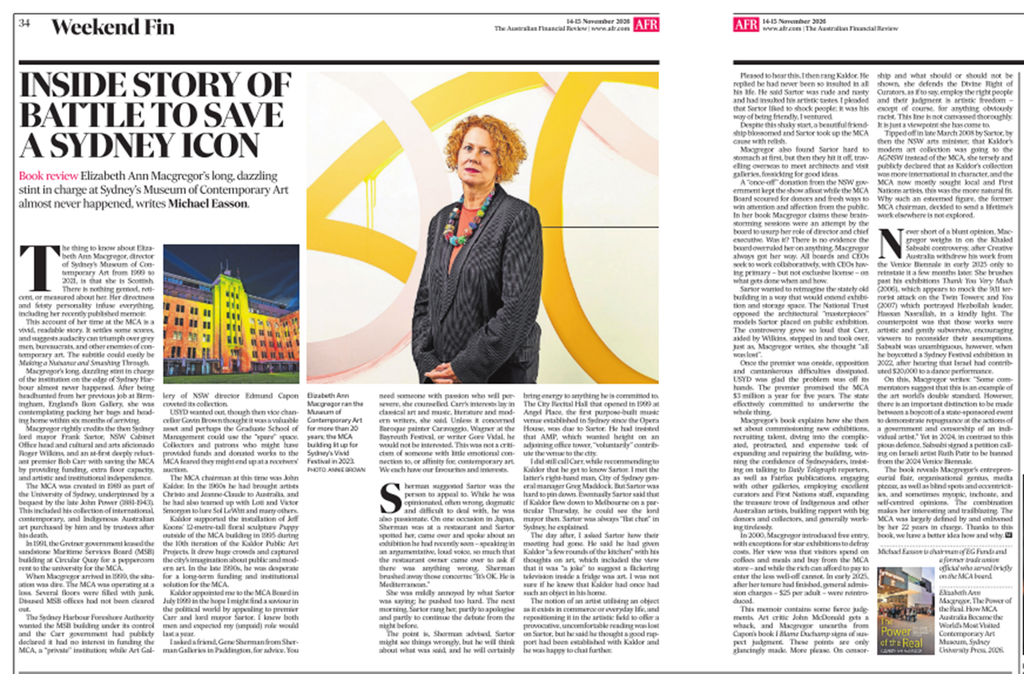
Review by Michael Easson of Elizabeth Ann Macgregor, The Power of the Real. How MCA Australia Became the World’s Most Visited Contemporary Art Museum, Sydney University Press, 2026. Edited and as published online on 12 November 2026 in the Australian Financial Review, https://www.afr.com/life-and-luxury/arts-and-culture/inside-the-mca-board-s-historic-high-stakes-battle-to-save-the-ship-20261112-p61cxo, and in print in the weekend edition, 14-15 November.
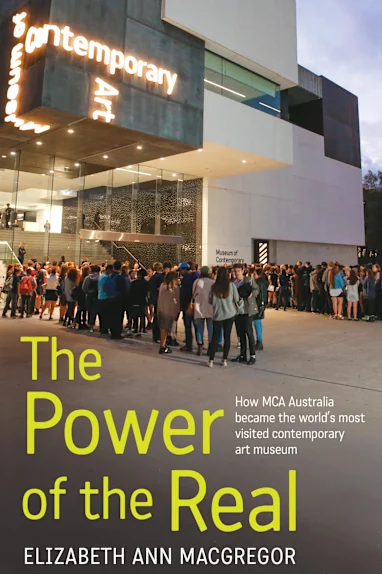
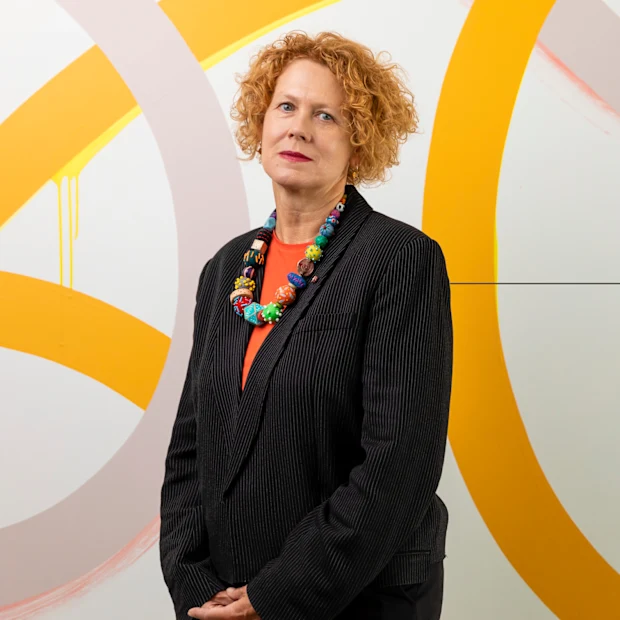
The thing to know about Elizabeth Ann Macgregor, Director of the MCA, 1999-2021, is that she is Scottish. There is nothing genteel, reticent, or measured about her. Her directness and feisty personality infuse everything, including her memoir.
This account of her time at the MCA is a vivid, readable story. It settles some scores, and suggests that audacity can triumph over grey men, bureaucrats, and other enemies of contemporary art. The subtitle could easily be Making a Nuisance and Smashing Through.
Macgregor’s long, dazzling stint in charge of the institution on the edge of Sydney Harbour almost never happened. After being headhunted from her previous job at Birmingham, England’s Ikon Gallery, she was contemplating packing her bags and heading home within six months of arriving.
Macgregor rightly credits Sydney Lord Mayor Frank Sartor, NSW Cabinet Office head and cultural and arts aficionado Roger Wilkins, and an at first deeply reluctant Premier Bob Carr with saving the institution and providing funding, extra floor capacity, and artistic and institutional independence.
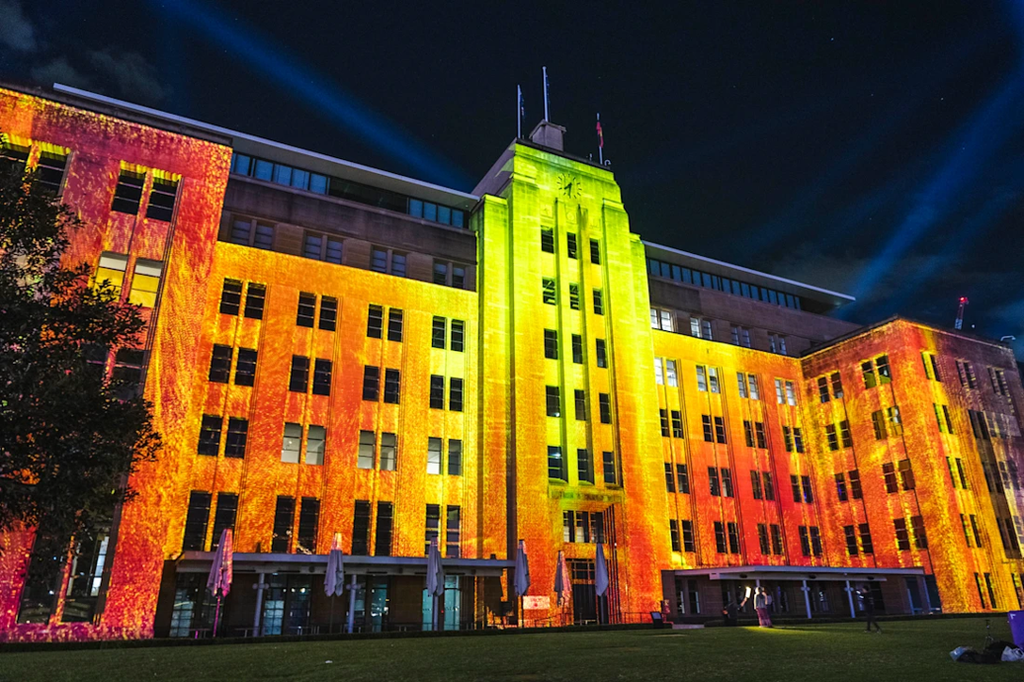
The MCA was created in 1989 as part of the University of Sydney, underpinned by a bequest by the late John Power (1881-1943), including his collection of international, contemporary, as well as aboriginal, art purchased by him and by trustees after his death.
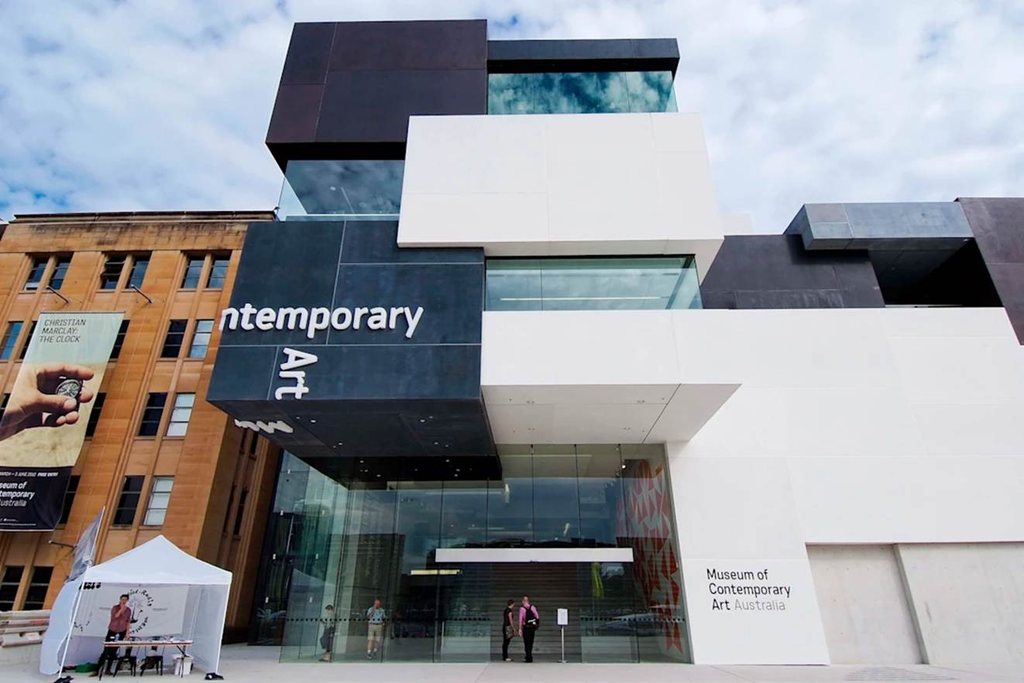
In 1991, the Greiner government leased the sandstone Maritime Services Board (MSB) building at Circular Quay for a peppercorn rent to the university for the MCA.
When Macgregor arrived in 1999, the situation was dire. The MCA was operating at a loss. Several floors were filled with junk. Disused MSB offices had not been cleared out. The Sydney Harbour Foreshore Authority wanted the MSB building under its control and the Carr Government had publicly declared it had no interest in funding the MCA, a “private” institution; while Art Gallery of NSW director Edmund Capon coveted its collection.
USYD wanted out, though then vice chancellor Gavin Brown thought it was a valuable asset and perhaps the Graduate School of Management could use the “spare” space. Collectors and patrons who might have provided funds and donated works to the MCA feared they might end up at a receivers’ auction.
John Kaldor, the MCA Chairman since 1998 (to 2003). In the 1960s he had brought artists Christo and Jeanne-Claude to Australia, and he had also teamed up with Loti and Victor Smorgon to lure Sol LeWitt and many others.
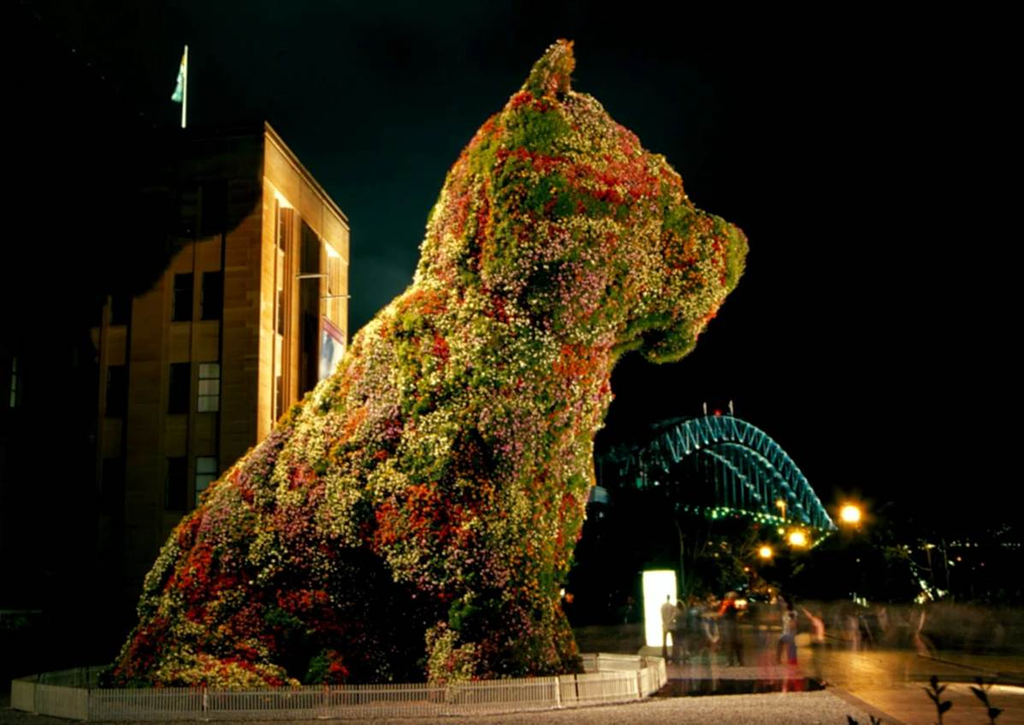
Kaldor supported the installation of Jeff Koons’ 12-metre-tall floral sculpture Puppy outside of the MCA building in 1995 during the 10th iteration of the Kaldor Public Art Projects. It drew huge crowds and captured the city’s imagination about public and modern art. In the late 1990s, he was desperate for a long-term funding and institutional solution for the MCA.
Kaldor appointed me to the MCA Board in the hope that I might find a saviour in the political world by either appealing to the NSW Premier Bob Carr, or the Lord Mayor of Sydney, Frank Sartor. I knew both and expected my (unpaid) role would last a year.
I asked a friend, Dr Gene Sherman. I had gladly stored Guan Wei’s paintings in the Labor Council building for her as that artist was becoming better known. I attended numerous openings of modern art exhibitions at her galleries in Paddington. I asked what she would do. The choice was between Sartor, Lord Mayor from 1991 (t0 2003) and Bob Carr, Premier of NSW from 1995 (to 2005). With the latter, his interests were in classical art and music, literature and modern writers. Unless it was Caravaggio, Wagner at Bayreuth, or Gore Vidal, Carr would not be interested. You need someone with passion who will persevere, she counselled. It is not to criticise someone for little emotional connection or affinity with contemporary art. We each have our favourites and interests.
On the other hand, she explained, Sartor was opinionated, often wrong, dogmatic, and difficult to deal with, and passionate. He is the person to appeal to. On one occasion in Japan, she was at a restaurant and Sartor spotted her, came over and spoke about an exhibition he had recently seen, speaking in an argumentative, loud voice, so much that the restaurant owner came over to ask if there was anything wrong, wondering if this was shouting, a reason for alarm. She looked up and explained: “it’s OK. He is Mediterranean.”
She was mildly annoyed by what Sartor was saying, as he pushed too hard in argumentation. The next morning, he rang partly to apologise and partly to continue the debate from the night before. What is the point here? You can talk to Sartor: he might see things wrongly; he will think about what was said and he certainly brings energy to anything he is committed to. For example, the City Recital Hall, opened in 1999 at Angel Place, the first purpose-built music venue established in Sydney since the Sydney Opera House, was due to Sartor. He insisted that AMP, wanting height on an adjoining office tower, “voluntarily” contribute this to the city.
I did still call Carr, while recommending to Kaldor that he get to know Sartor. I met the latter’s right-hand man, City of Sydney general manager Greg Maddock. But Sartor was hard to pin down. Eventually Sartor said that if Kaldor flew down to Melbourne on a particular Thursday, he could see the lord mayor then. Sartor was always “flat chat” in Sydney, he explained.
The day after, I asked Sartor how their meeting had gone. He said he had given Kaldor “a few rounds of the kitchen” with his thoughts on art, which included the view that it was “a joke” to suggest a flickering television inside a fridge was art. I was not sure if he knew that Kaldor had once had such an object in his home.
The notion of an artist utilising an object as it exists in commerce or everyday life and repositioning it in the artistic field to offer a provocative, uncomfortable reading was lost on Sartor, but he said he thought a good rapport had been established with Kaldor and he was happy to chat further.
Pleased to hear this, I then rang Kaldor. He replied he had never been so insulted in all his life, commenting that Sartor was rude and nasty, insulting his artistic tastes. I pleaded that Sartor liked to shock people; it is his way of being friendly, I ventured.
Despite this shaky start, a beautiful friendship blossomed and Sartor took up the MCA cause with relish. Sartor’s then partner, the dancer Hephzibah Tintner (until her death from cancer in 2001) was enthusiastic and a vital factor in sustaining and deepening Sartor’s interest.
Macgregor also found Sartor hard to stomach at first, but then they hit it off, travelling overseas to meet architects and visit galleries, fossicking for good ideas.
A “once-off” donation from the NSW State government kept the show afloat. The board scoured for donors and fresh ways to win attention and affection from the public. A Jackson Pollock retrospective was one suggestion; consideration of Ken Done’s work another, the cartoons of Leunig one more. Most brainstorming sessions summon roughly considered ideas ready for chopping or refinement.
In her book Macgregor claims these brainstorming sessions were an attempt by the board to usurp her role of director and chief executive. Was it? There is no evidence the board overruled her on anything. Macgregor always got her way. All boards and CEOs seek to work collaboratively, with CEOs having primary – but not exclusive license – on what gets done when and how.
Macgregor writes that “Showing work by dead white male artists such as Jackson Pollock was not part of my strategy”. Yet a retrospective on Andy Warhol – so white he was albino – just before she started as Director, was wildly popular with visitors.
Sartor’s vision was to reimagine the building, extending and growing floorspace, exhibition and storage space for the collections. The National Trust opposed the architectural “masterpieces” Sartor placed on exhibition. The controversy grew so loud that Premier Carr, abetted by Wilkins, decided to step-in and take over, just as she thought “all was lost”. Sartor later joked, as quoted: “Bob Carr gave us a problem of city significance. We took it, we worked on it, we turned it into a problem of state significance and gave it back to him.”
Once the Premier came onside, opposition and cantankerous difficulties dissipated. The University was glad the problem was off its hands. The Premier promised the MCA $3.0m a year for five years. The State effectively committed to underwrite the whole thing.
Macgregor’s book explains how she then set about commissioning new exhibitions, recruiting talent, diving into the complicated, protracted, and expensive task of expanding and repairing the building, winning the confidence of Sydneysiders, insisting on talking to the Daily Telegraph reporters, as well as Fairfax publications, engaging with art galleries across the state, assisting Blacktown Council develop plans for their Art Complex, employing excellent curators, employing Aboriginal and Torres Strait staff, expanding the treasure trove of Aboriginal and Australian artists, building rapport with big donors and collectors, working tirelessly.
During the GFC, never letting that crisis go to waste, she obtained millions in funding from the Federal government. Introduced on her watch in 2000, Macgregor defends free entry with exceptions for star exhibitions to defray costs. Visitors spend on coffees and meals and buy items in stock. The rich can afford, the less well-off cannot, she argues. In early 2025, after her tenure had finished, general admission charges – $25 per adult – were reintroduced.
Some fierce judgements are offered. Art critic John McDonald gets a whack, and Macgregor unearths from Capon’s book I Blame Duchamp signs of suspect judgement. But these points are only glancingly made. More please. On censorship and what should or should not be shown, she defends the Divine Right of Curators, as if to say, employ the right people and their judgement is artistic freedom, except of course, for anything obviously racist. This line is not canvassed thoroughly. It is just a viewpoint she has come to.
Tipped off in late March 2008 by Sartor, the then NSW Minister for the Arts, that Kaldor’s modern art collection was going to the AGNSW instead of the MCA, she tersely and publicly declared that as Kaldor’s collection was more international in character, and the MCA now mostly sought local and First Nations artists, this was the more natural fit. Why such an esteemed figure, the former MCA chairman, decided to send a lifetime’s work elsewhere is not explored. Macgregor comments they were mainly male artists. Introspection is missing. The upshot, though, is that Sydney’s two major, public art galleries have extensive modern art collections.
Never short of a blunt opinion, she weighs in on the Khaled Sabsabi controversy, after Creative Australia withdrew his work from the Venice Biennale in early 2026. She brushes past his exhibitions “Thank You Very Much” (2006), where mocking of the 9/11 terrorist attack on the Twin Towers is plain; and “You” (2007) which portrayed Hezbollah leader, Hassan Nasrallah, in a kindly light. The counterpoint was that those works were artistic and gently subversive, encouraging viewers to reconsider their assumptions. He was unambiguous, however, when he boycotted a Sydney Festival exhibition in 2022, after hearing that Israel had contributed $20,000 to a dance performance.
On this, she says: “Some commentators suggest that this is an example of the art world’s double standard. However, there is an important distinction to be made between a boycott of a state sponsored event to demonstrate repugnance at the actions of a government and censorship of an individual artist, ” as if this was the last word. Yet in 2024, in contrast to this pious defence, Sabsabi signed a petition calling on Israeli artist Ruth Patir to be banned from the 2024 Venice Biennale.
One claim is the book’s subtitle proclaiming the MCA is the most visited gallery of its kind anywhere. in contrast, in 2025 for example, New York’s MoMA saw nearly 2.8 million visitors and the MCA around 820k. The MoMA, as one would expect in a much bigger city, has always outranked the MCA in visitor numbers, which is hardly diminishes the MCA’s achievement in multiple respects. But Macgregor’s point is that the MCA’s concentration on contemporary art, rather than the wider notion of “modern art” makes it unique and world leading.
The book reveals Macgregor’s entrepreneurial flair, organisational genius, media pizzaz, as well as blind spots and eccentricities, and sometimes myopic, inchoate, and self-centred opinions. The combination made her interesting and trailblazing. The MCA was largely defined by and enlivened by her 22 years in charge. Now we have a better idea how and why.
*Michael Easson served on the MCA Board, July 1999 to August 2000.
How the article appeared in print: