Published as edited online under the heading: ‘After the midterms, populism makes way for business as usual’, and in print with the heading ‘Anglosphere’s Politics Revert to the Sensible Centre’, The Australian, 12 November 2026, p. 13.
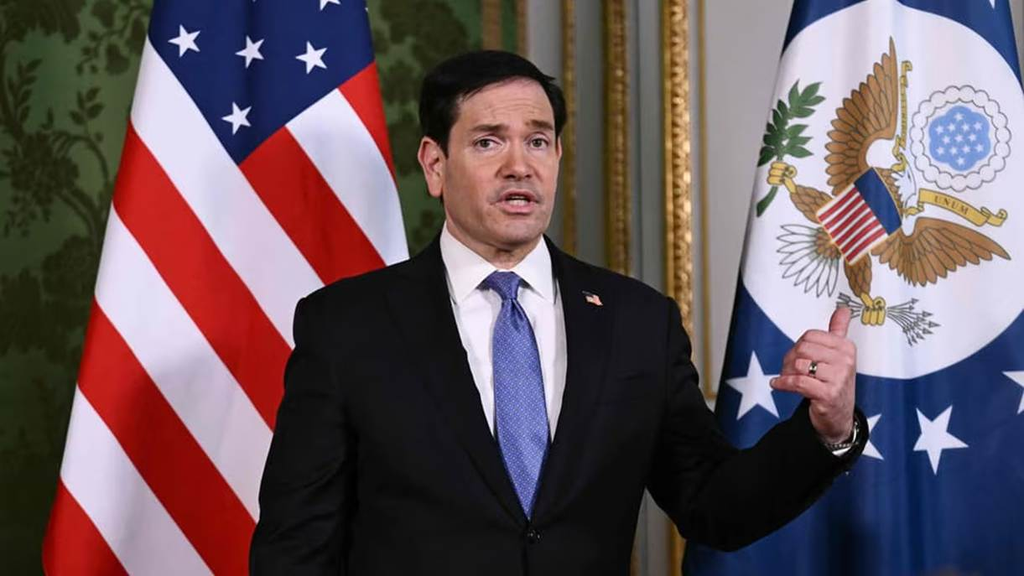
One good thing about the US mid-term elections is that two relatively normal candidates are likely to run for the Presidency in 2028. There will be a large field in both parties, and it is too early to tell, but right now Republican Secretary of State Marco Rubio and Democrat Georgia Senator Jon Ossoff (with new Texas Senator James Talarico or Minnesota Governor and former Senator Amy Klobuchar as his running mate?) are potential strong candidates.

Vice President J.D. Vance, however, will claim the Republican party nomination, as the “continuity” candidate for the MAGA cause. But he is damaged by his strident backing of Vivek Ramaswamy’s odiously unsuccessful campaign for Governor of Ohio, Vance’s home state. Ramaswamy is the first Republican gubernatorial candidate in 20 years to lose “the buckeye state”.
Trump loves winners. His grip on the Grand Old Party is asphyxiating. The new Congress Republicans are more MAGA-loving than ever. But Trump might decide to remain ambivalent, neutral, or might back Rubio as 2028 approaches, especially if he concludes Vance is a poor bet.
Back to that in a moment. The bigger point is that we are seeing the Anglosphere nations moving away from populism and returning to normal, the sensible centre.
In the UK, the Opposition Leader, Kemi Badenoch, is seeing off the Farage threat in the UK restoring the Labour versus Conservative equilibrium. Andy Burnham and Badenoch have rejuvenated confidence in the two mainstream parties. Farage’s Reform is in decline. Labour and the Conservatives are polling ahead of all others.
At the end of this month, you can back London to a brick that the Liberals in Victoria will completely trounce One Nation (and Labor), with many consequential national implications. Peak One Nation will have passed. The narrative about the next Federal election increasingly will focus on Angus Taylor versus Anthony Albanese, Liberal versus Labor. The Green and One Nation extremes are less popular.
In New Zealand elections last weekend, incumbent National Party leader Christopher Luxon and Labour’s Chris Hipkins are neck-and-neck with the tally so far (many votes still to count) slightly favouring the incumbent. They present as centre-right and centre left leaders respectively. Luxon is the current PM and Hipkins (to 2023) was his predecessor. New Zealand’s Mixed Member Proportional (MMP) representation system, however, is complicated and encourages populist parties. New Zealanders cast two votes: one for a specific candidate to represent their electorate and the other for the political party of their choice. The minimum threshold for the party vote is 5%. Of the minimum 120 seats in the parliament, 71 are allocated to constituencies and the remaining 49 are notionally distributed to the eligible, threshold-clearing, parties proportionately. But if a party wins more local electorates than its share of the popular vote, the second vote, it keeps those ‘extra’ seats. Nationals and Labour both scored around 30% of the second votes and are winning more than 60% of constituency seats. So, the size of the parliament is likely to be 130-132 members.
The point to emphasise here, is that the NZ Election is won from the centre.
But with this caveat: the electoral system matters too. The US, the UK, and Canada operate with first-past-the-post elections. Unlike Australia, preferences are not distributed. This partly explains why New Zealand’s mixed member proportional electoral system is favourable to small, noisy parties such as NZ First, the Greens, and the new Teal-like Opportunity party.
Another relevant example in Anglo-French Canada is that Mark Carney’s Liberal Party in 2025 beat the Conservatives in an election between two centre parties, one more liberal, the other more conservative. The sensible centre is alive and well there.
The author’s part-Irish heritage bristles about the “Anglo-world” or Anglosphere, but there is something seemingly balanced in the psyche of the “five eyes” defence and security allies – the US, the UK, Canada, Australia and New Zealand. There is undeniably a cultural (not racial) collective here, and it is worth cherishing, for all the veins of injustice that historicise it. There is a credible narrative to say things in the democratic community are going in the right direction.
But there are some qualifications. In the US Congress, the Democrats lack charisma and strong leadership. Trump is now a cornered elephant (or an elephant on the loose with nothing to lose) and may riot.
Populist scares in the Anglo world, including with Trump, are reminders of the Achilles heel of democracy, and how quickly citizens of democratic nations can throw away the ideals of democracy in favour of an emotional fix for real daily grievances.
Globally, there is no room for relief or complacency — Marine Le Pen and the worrying Jordan Bardella are on track to take over the French Assemblée. The AfD is still on the rise in Germany, and Musk remains the no-interest bank of international extreme-right populism.
From the non-democratic world, China, Russia, and Iran do everything possible on the dark web and otherwise to undermine moderate politics in democracies.
Back to America, where Vance’s political fortunes are tied to a President whose approval ratings are circling the drain. After Rubio resigns as Secretary of State (likely within the next six months, so he can contest the Republican presidential primaries) he becomes the relatively normal Republican candidate. But there is a long way to go. The next US Presidential election will be about the legacy of Trump, whether Trumpism and MAGA are stalled or fatally weakened. And you cannot write-off hubris and overreach with the new Democrat majority.
Donald Trump Jr will seek to influence his father that the MAGA movement is extended only if Vance is the guy… Rubio, it will be argued, is a product of the established party, and the establishment donors.
For the Democrats, its Blue Tsunami sweep is the biggest shift in American politics since 1974, when Democrats routed the Republicans in mid-term elections in the aftermath of Watergate.
Mainstream political parties exist for one reason: to win elections. Of course, ideas and ideals permeate their outlook. Trump took a torch to the country-club, elite establishment. He refashioned the Republican party, winning legions of blue-collar white American males, and denounced internal opponents as RINOs (“Republicans in name only”) driving many out. He won two Presidential elections and in three contests won increased Republican votes and ultimately clinched control of the White House, the House and the Senate. But Trump’s rapidly incinerating reputation marks him as no longer a winner.
The perils in the wider world are many. But in the Anglosphere, broadly and inclusively defined, as centrist politics return to the fore, there are reasons for new optimism.
How the article appeared online: