
Published as edited online under the heading ‘Best Israeli election Result would Omit Cuckoos in Netanyahu’s Nest’, and in print under the heading ‘High Stakes in Bitter Israel Poll’, Australian Financial Review, 26 October 2026, p. 38.
Only one thing is certain about the Israeli elections on 27 October: It will be complicated on the day of vote-counting and immediately thereafter. The next Prime Minister will either be the veteran incumbent, Likud’s Benjamin “Bibi” Netanyahu, or Opposition figure and former IDF head, Gadi Eisenkot, the centrist party leader of Yashar! (which in Hebrew means ‘straight’ or ‘truthful’ or ‘honest’). Polls indicate the latter’s bloc of support will win a plurality of seats, but not enough to win a majority.
There are 38 registered political parties vying for 120 seats in the Knesset. No poll suggests one party will come within cooee of an outright majority. A coalition government is inevitable. But the complexion of the next coalition might surprise.
Israel has a proportional representation electoral system with a kicker: No party can be represented unless by itself, or on a ‘joint ticket’ with other parties, it achieves 3.25%, the minimum threshold. Only 11-13 of the registered party tickets are likely to achieve that. That means most parties fail.
If, say, 10% of the electorate vote for such minor parties, all their votes are wasted. The 120 seats are allocated as if they never participated. This matters significantly. At the last election, around 420,000 votes were wasted. Two parties in 2022, an Arab party, Balad, with 2.91%, and a leftwing party, Meretz, with 3.16%, both failed the threshold. The electorate was otherwise astonishingly evenly divided. Prime Minister Netanyahu won office then because he was instrumental in forging coalitions of minor right-wing parties to garner enough votes to win. He brokered deals.
The anti-Netanyahu parties, on the other hand, were not so skilfully marshalled. This time Meretz are now part of the Democrats and Balad is now part of the Arab Joint List and no longer complicate the Opposition’s path to victory.
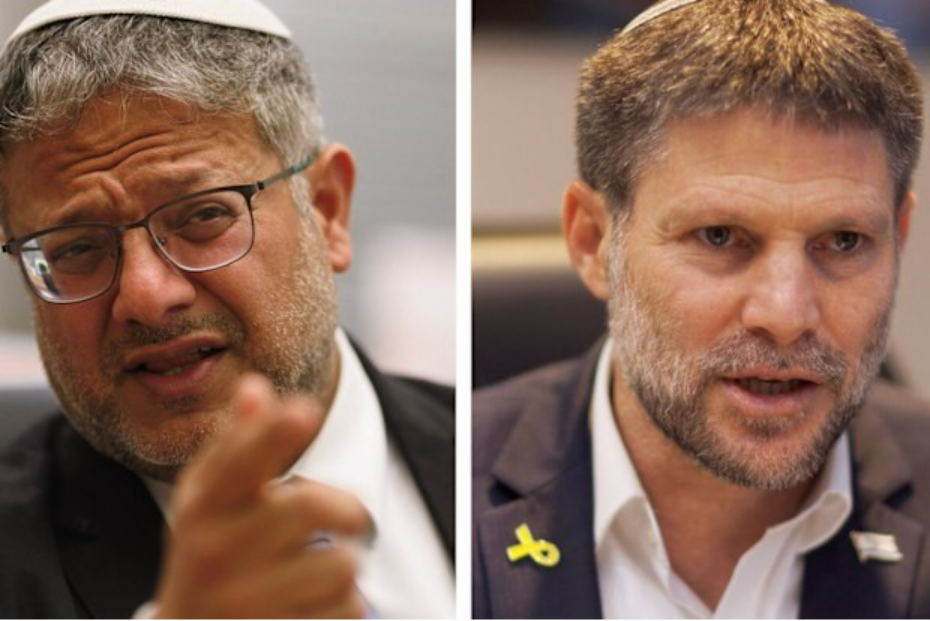
October’s election will turn on the judgement of the electorate on Netanyahu, his responsibility for October 7, 2023, and his war-time leadership; voter participation (last time there was a 70.63% turnout); the Arab vote impact on seats won; and the range of joint tickets with minor parties aimed at ensuring votes are not wasted. (For example, Netanyahu in 2022 got Otzma Yehudit and Religious Zionism – led by Itamar Ben Gvir and Bezalel Smotrich, respectively, two extreme right-wing, messianic parties, to combine. Smotrich’s party, on its own, may not have gained enough votes.)
Personality animosities are a key factor. Netanyahu is loathed by the Opposition parties.
Presently, polls suggest the Netanyahu bloc consists of Likud, religious parties, and the extreme nationalist settler parties. The polls suggest that Likud is set to be the largest right-wing party, but the religious parties (Shas and United Torah Judaism) combined with the controversial Otzma Yehudit and Religious Zionism parties, could outnumber Likud. If the bloc won a majority, Netanyahu would remain as PM, but his bargaining power internally within this coalition could be diminished.
The Opposition led by Eisenkot’s Yashar, with B’Yachad (‘Together’), a merger of two opposition parties; the Democrats (the spiritual heirs of the old Israel Labour party); and Yisrael Beiteinu (‘Israel [is] Our Home’) led by Avigdor Liberman), the Russian-speakers’ party, are the Eisenkot bloc. Eisenkot is pro-West Bank settlements but prefers close to the 1967 “Green Line”, is appalled by settler violence against Palestinian villagers, and opposed to the creation of an independent Palestinian state. A surprise is that over the course of this year the former Prime Minister Naftali Bennett, the leader of B’Yachad, the party which absorbed the main opposition party, Yesh Atid (‘There is a Future’) led by Yair Lapid, plummeted in the opinion polls.
Opinion polls suggest that between Netanyahu’s bloc and Eisenkot’s they win around 50-53 seats respectively.
A complication to guessing the future is the Arab vote. There are two main Arab parties: Ra’am, led by Mansour Abbas, a centrist Muslim leader, part of Bennett’s coalition government between 2021-22; and second, the Joint List of Arab parties, namely Hadash, Ta’al, and Balad which are anti-Zionist. Polls indicate between 6 and 8 respectively will be won by them (a total of 14). Both Liberman and Eisenkot say they will not forge a coalition with the Arab parties.
So, on current projections, there is no clear path for either bloc to a majority.
If this is not already complicated, there are two new parties perilously close to the threshold. One is Amcha Yisrael (‘Your People Israel’), a right-wing party, led by Ofer Winter, a retired IDF Brigadier-General. He might drain votes away from Eisenkot. There is also the joint ticket of Miluimnikim (‘the Reservists’) led by defence strategist Yoaz Hendel, with the ‘New Economic Party’ led by economist Yaron Zelekha. The latter parties are jointly proposing that they could work with either of the two major blocs. If Hendel and Zeleka win election, and Amcha Yisrael fails, they might be a catalyst for a national unity government. But more than likely, both these new entrants will fail to make the cut.
This writer hopes that Ben Gvir, Minister for state security, and Smotrich, Minister of Finance and Minister for Defence covering the West Bank, are excluded from any new coalition, including if led by Netanyahu. They are the cuckoos in the nest despoiling Israel’s global standing. Both are notorious for extremist, racist statements. As distinct from Israel itself, where Arabs enjoy full rights of citizenship, parts of the West Bank have become apartheid-state like on their watch. In mid-2025, the governments of Australia, the UK, France, New Zealand. and Norway sanctioned both ministers.
This election is super momentous for Israel’s future. President Trump’s endorsement of Netanyahu in the last week might help the incumbent. (It is hard to think anywhere else where Trump is popular outside of Israel and, perhaps, Russia.)
If religious and Arab voters turn out in greater numbers than usual, that could tip the scales. Then there is the horse-trading and coalition building after the votes are counted. The deep divisions in Israel need to be healed. As improbable as this currently sounds, a coalition of Yashar, Likud, the religious parties and Yisrael Beiteinu cannot be ruled out, with Eisenkot as Prime Minister, and Netanyahu promised immunity on corruption charges. Expect the unpredictable.