Published on-line in the Australian Financial Reviewon 20 January 2026
Who is he, the only man involved in the 2026 Adelaide Writers Week (AWW) imbroglio not turned to custard?
Peter Malinauskas, the 47th Premier of South Australia and Minister for Defence and Space Industries (he knows where the future lies), took a moral stand late last year. He expressed the view that the radical activist, sociologist, children’s writer, and novelist Randa Abdel-Fattah was not an ideal person to participate in the annual Adelaide writers’ festival. He asked the Board to reconsider its invitation to her.
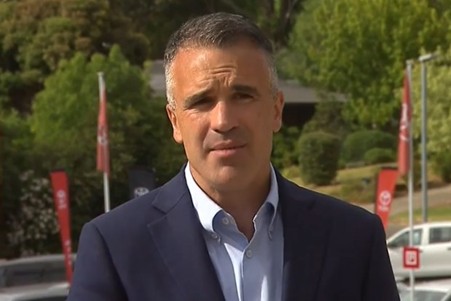
Photo Credit: Nine News
At that time, on the public record, was this knowledge: Abdel-Fattah insisted Hamas was not a terrorist organisation; she stated that there should be no safe places for Zionists on university campuses; led a campaign to deplatform Jewish-American New York Times writer (and Netanyahu critic) Thomas Friedman from the 2024 AWW; staged noisy demonstrations against “Zionists” at Sydney university campuses; and bragged about deleting “Zionists” in references in her academic research, which led to suspension of her Commonwealth-funded Australian Research Council grant – since restored – a story for another time.
Also known, as Lee Kofman highlighted in these pages last week, Abdel-Fattah publicly shared (“doxed”) a leaked chat of 600 Jewish creatives – who were a support group helping each other deal with rising antisemitism. She framed predominantly progressive, two-state solution Jews as a sinister cabal of Zionist fascists.
Photo credit: AAP.
Malinauskas undoubtedly wondered what AWW CEO Louise Adler might be cooking up. He had in October received a steaming resignation letter from AWW director Tony Berg, the respected investment banker and arts patron. Adler’s radical left politics, the claim was, pervaded her judgement. There was also a 2025 public service audit of CEO and Board dysfunction. The AWW Board resembles a slow-moving kabuki theatre of political intrigue, literary entrepreneurialism (commendable – much was good), and shadow boxing. Manifestly, transparency and excellence in governance were lacking. Ms Adler might therefore be right in suggesting future management research students should find rich pickings here.
Malinauskas is a man of conviction, sure to stand firm. Without a clear sense of who you are, what is right, what you seek to achieve, you cannot sense what to concede and what is essential.
Malinauskas was born in Adelaide, of part Lithuanian and Hungarian heritage, Catholic – excelling at Mercedes College, worked at Woolworths, studied Commerce at the University of Adelaide, played AFL footy, and joined the right-wing Labor trade union, the Shop, Distributive and Allied Employees Union (SDA) – the “shoppies”, long regarded as the last bastion of the old Catholic Labor Right, a sub-grouping traditionally and to this day, sympathetic to Israel.
As a teenager, he became a part-time SDA “night organiser” and rose through the ranks to become South Australian head of the union, mentored by now Trade Minister Senator Don Farrell. In 2015, Malinauskas filled a casual vacancy in the state’s Legislative Council and immediately became a senior Minister. In 2018, he transferred to the lower house, becoming Opposition leader (after Premier Jay Wetherall lost re-election.)
What is particularly interesting about Malinauskas moving from “trolley boy” to star of South Australian Labor, is how left, right and centre of the party supported nearly every move. Tall, athletic, softly spoken, engagingly smart – he is a perfect specimen of centrist Labor.
In his inaugural speech as an MP in December 2015, he mentioned as a young boy standing in the old fish and chip shop his grandfather built “as he told me about the importance of taking opportunities.”
Malinauskas’ philosophy and pragmatism were revealed. He said: “I am a Labor man because I believe our grand old party understands that more of the right opportunities are created through a balance. Markets are efficient, but not infallible; government is necessary, but rarely extraordinary; and free enterprise should flourish, as long as it is fair. I appreciate that what constitutes the right balance is often subjective, so I am more interested in outcomes than ideological purity.”
A father, with Annabel, of four children, he once wistfully remarked: “These jobs are attached permanently with guilt. You feel guilty when you say no to a function because you want to do the right thing by your party and by your constituents…” That guilt keeps him in Adelaide with his young family, rather than on the national stage in Canberra.
Reverse-engineered martyrdom and rank hypocrisy are key to the 2026 AWW controversy. The calm considered advocacy of the SA Premier stands in contrast to the rousing defiance of Adler and company. Abdel-Fattah might now be re-invited to AWW 2027. But Malinauskas has not shifted. Yes. Free speech matters. So does balance, the key to understand Malinauskas’ public life.
Politics demands judgement, principle, and conviction –especially to contested measures. In his first speech as the Member for Croydon, Malinauskas said: “No-one has ever achieved great things without believing in themselves first.” This explains Malinauskas. Character and conduct are fused and fated.