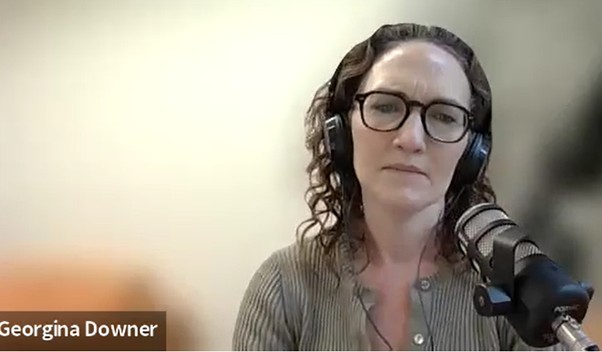
Welcome to Afternoon Light, the podcast of the Robert Menzies Institute by Georgina Downer.
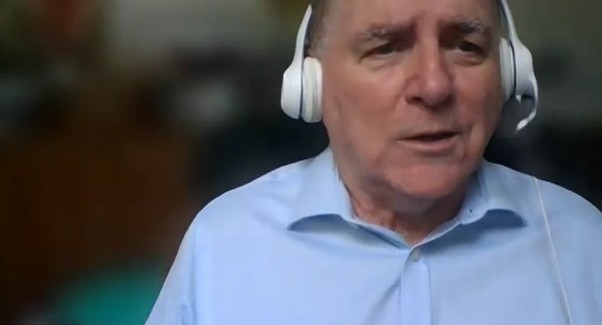
Georgina Downer: A man who “failed even at failure” was James Scullin, one of Australia’s worst Prime Ministers or just blessed with bad luck having been sworn in the week of the Wall Street Crash. Joining me to discuss Australia’s ninth prime minister is businessman, company director, former union leader and Labor historian Michael Easson Easson.
Welcome to Afternoon Light, Michael Easson.
Michael Easson: Lovely to meet you, Georgina.
Georgina Downer: It’s great to have you on Afternoon Light and to discuss, I think, a prime minister who is one of the lesser known but a prime minister who of course is becoming more and more talked about as we enter the election campaign season because he is the prime minister who famously lost after just one term in office: James Scullin.
Michael Easson: That’s true. He was the third prime minister to lose after one term in office. The earlier ones were Andrew Fisher, then Joseph Cook, and then we come to Scullin. So, it’s a very unusual event. He’s the last prime minister to only serve one term. So, as a Labor person, I’m hoping that won’t be the case later this year but as a Labor person, I know it’s going to be tough this year.
Georgina Downer: Yes. I mean, James Scullin, obviously, and we’ll get onto this in more detail a bit later, but James Scullin obviously faced a very, very, very unique set of terrible economic conditions with the Great Depression of course and the Wall Street crash that started it. It’ll be interesting to hear your views on how he handled that and whether a different prime minister might have handled it better, or maybe even worse but tell me about James Scullin, who he was and a bit of his background. Give us a flavour of the man.
Michael Easson: Scullin was born in country Victoria in 1876. He died in 1953. He was of Irish Catholic stock, the first Catholic Prime Minister of Australia. We beat the rest of the Anglo world, Australia, in terms of having Catholics and Jews in prominent positions in public life and being more commonly elected to parliament. So, that’s one of the reasons to note and celebrate James Scullin as an exemplar of the modern Australia that emerged in the 20th century. He’s of Irish stock. His parents came from Northern Ireland escaping some of the conflicts there, and he always had a passion and a belief in Ireland, although he tried to minimise any sectarian hatreds or manifestations of that in himself. He became active in the Labor Party after a rabble rouser, UK unionist Tom Mann came to Australia and he joined the Labor Party as a consequence – along with John Curtin who joined at a similar time and he became a federal MP in country Victoria in Corangamite from 1910 to 1913 and he again became a member of parliament from 1922 to 1949. So, he had a long period in parliament and as you noted earlier, he became prime minister in 1929. The week he was sworn in as prime minister, the Wall Street crash occurred. I don’t think any Western political leader had a good time of it in that period or did outstandingly well. Scullin was overwhelmed by all of that.
You mentioned in the introduction “The man who failed at failure?” That was a phrase that an historian called Don Rawson once said to me when he told me “Look, this guy is interesting, but I wonder whether he failed even at failure.” Meaning, in all the turmoil and challenges he faced during the Great Depression, he went out with a whimper rather than a bang. He didn’t understand or grasp properly the challenges of that era. That’s one reason I wrote the book. I thought “Gosh! This is a hard topic to consider, the life of Scullin. Was he better than the phrase of Don Rawson?” I wanted to force myself to understand what made him the person he became and maybe understand if he was more interesting than just the Great Depression experience.
Georgina Downer: Well, having read your monograph, I would say the answer is yes. He was much more interesting than just the Great Depression prime minister. And we’ll learn more about him. Now, I thought it was interesting to remember that he was the only Victorian Labor prime minister until Bob Hawke. I mean, Bob Hawke also sort of spends a lot of his time in Perth as well. So, he’s a bit more complicated than just being a Victorian but …
Michael Easson: Labor never did well in Victoria.
Georgina Downer: No.
Michael Easson: And so, in New South Wales, we were forming government in 1910, in South Australia as well in 1910. Victoria only had its first majority Labor government in 1952 and then [in 1955] the great split in the ALP consumed the government until better times emerged [decades later].
Georgina Downer: So, James Scullin as you said, he has this interaction with Mann, the sort of firebrand British union leader. He also gets very interested, doesn’t he, in the Catholic encyclical on social and political thought. And I’m not going to be able to pronounce it properly, I’m sure. Is it Rerum Novarum?
Michael Easson: Rerum Novarum, written by Pope Leo the 13th in 1891. It was a profoundly significant publication throughout the world. Leo the 13th was worried about the modern world, as a lot of the popes in this period were. And in this encyclical, he condemned capitalism, untrammelled capitalism leading to slavery of the working class. He also attacked communism and socialism because he saw those ideals as being godless. And the church was particularly shaken by the revolutionary fervour of 1848 onwards in Europe, in France and many other parts of Europe. So, he wrote this encyclical. It had a big impact. In Sydney, Cardinal Moran who was a friend of the labour movement basically defended the Labor Party and unionism, and he saw this as an important bulwark against unrestrained capitalism and radical socialism or communism. So, Cardinal Moran in the 1890s onward in Sydney had an affiliation with the labour movement, seeing it as opposed to socialism and seeking to reform capitalism. There’s a great book by Bede Nairn on the early history of the Labor Party called Civilising Capitalism. In that idea and ideal, the game is not about destroying the existing society but to civilise capitalism. I see that is a kind of Burkeian approach to reform which characterised the early labour movement and its strand in Labor opinion which is not well appreciated. But as a young man James Scullin is a Catholic, he is active in debating societies in Ballarat where he mostly grew up, he is involved in Public Questions Society debates, he referees or judges some of those debates. And on one occasion, he went to his parish priest with a dog-eared copy of Rerum Novarum and asked “Could you go over this with me, please, because I think this is a really interesting document.” And the priest who had recently escaped seminarian studies, learning about the great founders of the church in the early centuries, hadn’t read the document. He said to Scullin, “Look, son, I don’t think I’d worry about it,” meaning he hadn’t caught up with it. But Scullin did. A lot of his life was to try to live to the ideals of Rerum Novarum, notwithstanding his involvement in 1921 with the socialisation debate within the Labor Party, which I’m sure we can talk about.
Georgina Downer: It’s really interesting how involved the Catholic church was in political ideas. I mean, as you said, there’s a concern around communism and it being godless and of course concern about the poor and needy who might be the victims of untrammelled capitalism. So, there are kind of social elements and religious freedom elements to this taking quite a strong stance on political and social issues. But in a country that prides itself of course on separation of church and state, it’s not a theocracy in Australia, were there any tensions there or did someone like Scullin see Rerum Novarum and Catholic social and political teachings as just sort of informing their own personal opinions rather than directing their political activity and of course activity in the parliament?
Michael Easson: It’s a good question. There was a biography written on Scullin in 1971 by John Robertson. And at the very end of the book, he says “… a lot of people talk about the influence of the church on Scullin but he’s the son of rail workers. He grew up poor. Isn’t that a better explanation for why he sought change than the influence of the Catholic church?” I would make a different point to the question asked by that biographer. The fact that he would ask “Isn’t it so compatible, Rerum Novarum, and the thinking of the church on social issues with what a moderate sensible Labor person would want to do in the early part of the 20th century onward?” indicates the compatibility of both ideals. Scullin actually believed there was never a conflict between his religious ideals and what he got out of the church in terms of social thinking and the approach of the Labor Party. They went together. And I think a lot of people in the early history of the Labor party saw that as completely compatible, and no conflict. Incidentally, the early Labor Party was very much a Protestant party with Catholic influences on the fringes, until the great split that occurred in 1916 over World War I over conscription. The complexion of the Labor Party became a lot more Catholic thereafter. But I would argue there was already a stream of Irish Catholic and Catholic Australians joining the Labor Party, seeing compatibility between Church thinking and Labor ideals.
Georgina Downer: It’s interesting how much thought and consideration Scullin engages in from that early stage in political ideals. He leaves school at age 14 and has a childhood accident which really means that his trajectory is quite different from a sort of normal boy. He’s not able to play in the creeks and streams or whatever you did when you were living in and around Ballarat and he has quite a sort of bedridden childhood, doesn’t he? So, do you think that all creates in him this bookish personality where he does think very deeply about ideas and obviously, he’s very attracted to the more sort of socialist ideals that are coming through Catholic teachings and the like?
Michael Easson: Yes. Look, he was injured when somebody was playing hopscotch with him, some kid, somebody landed on his back when he wasn’t quite ready. And therefore, he spent a long period in convalescence in hospital. He read the whole of Dickens’ novels while he was in bed. He was a voracious reader, he was a debater, and clearly, he was an autodidact in a period when that wasn’t so exceptional. It’s interesting a lot of the early people in the labour movement and also in the conservative and liberal traditions within Australia hadn’t gone to university but were well read. There were debating societies. There were arts institutes and literary institutes in different parts of the country in the major cities. There was a considerable reading public – and an intelligent reading public – which Scullin was part of. So, that I think is an interesting part of his development. After he lost his seat of Corangamite in the election in 1913, the election which Cook won, Scullin became the editor of the Ballarat Echo, a newspaper out of Ballarat. And it’s interesting he published essays by Hilaire Belloc, by GK Chesterton, some of the leading Christian intellectuals from the UK. And it’s interesting that this person was so moved and fascinated and curious about ideas and that, I think, is one of the features of Scullin’s life that deserve commemoration and respect.
Georgina Downer: He no doubt was very influenced too by the 1890s depression. I guess, he would have been in his 20s or late teens, 20s at that time. Is that something that you see him reflecting on? I guess, the thinking around control over banking and not allowing the sort of private banks to run away with people’s savings and that kind of moderating force on capitalism and private enterprise that you see coming through in later years, too.
Michael Easson: Well, I guess he was alive, and he was age 14 when the depression of the 1890s began. Marvelous Melbourne, marvellous Victoria that’s incredibly prosperous colony, the most prosperous of the Australian colonies, like the rest of Australia suffered depression, suffered hunger. And he is one of the Labor leaders who’d experienced hunger in growing up and deprivation. As a young man, as a teenager, as a young person before that, he was out catching rabbits, fishing, trying to get some food for the family as well of hoping his father could continue in his employment in the railways. So, yes, deprivation and the experience of that period caused lots of people to think “Is there an alternative to the way the world is operating and how do we prevent depression? How do we ensure civilisation is saved?” Extremes offered answers. Scullin had to wrestle with those things as a teenager, and it was a formative influence. I think, you’re quite right to highlight that.
Georgina Downer: As you said earlier, he gets into parliament in 1910, winning the seat of Corangamite but it’s sort of a short-lived political career in the first stage and just three years. He is involved in the union conference that debates this socialist objective. Can you talk about this debate and where Scullin fell on which side?
Michael Easson: Most people, when you look back at the socialisation debates of 1921, think of nationalisation and of this extreme position of the Labor Party. And in Queensland, the leader of the Queensland Labor delegation, Ted Theodore, was appalled by this discussion and voted against the socialisation objective. There was a coalition between Bob Ross who was a socialist litterateur and editor and pamphleteer from Victoria, John Curtin who was originally with the Timber Workers Union in Victoria and then went to Western Australia, and James Scullin, this holy James Scullin, Catholic activist, involved by then with the Australian Workers Union and they had an interesting take on what socialisation meant. I think, the objective was a disaster for the Labor Party because no one quite understood it. But Ross and Scullin believed that they were making a distinction between nationalisation and what some people called state socialism or state capitalism where the party controls everything or the state controls everything. They were trying to say that socialisation meant how do you ensure that society is organised in a more social way where there’s greater worker participation, where there’s encouragement of freedom at the workplace through trade unions and the like. So, this was the distinction they were trying to make and no doubt failed to make because the term was lead in the saddle of the Labor Party. Some of the parts of the resolutions adopted both by the Union [ACTU] Conference in Melbourne in June 1921 and later that year in Brisbane at the Federal Labor Party Conference included things like having an economic council for industry and ideas that were never properly explained by anyone. So, you can imagine with a disparate group of people devising the policy. You had a mix of hardline socialism, pragmatic unionism and this kind of strand that Ross and Scullin and Curtin in sympathy were trying to get up. And you know the old line about “A camel is a horse designed by a committee.” Well, I think the socialisation objective had something for everyone and that was part of its peril for the Labor Party. People didn’t really understand what it meant and ultimately it had to be drastically amended, if not ditched, in 1927.
Georgina Downer: I mean, some of the ideas, I think, are around a Supreme Economic Council which would run the economy. There would be …
Michael Easson: Completely ludicrous.How do you explain that? I mean, there was a similar sounding if not exact sounding name in the Soviet Union, which was terrible to think that casually we would introduce these concepts but look, a number of them were influenced by G.D.H. Cole, an English theoretician who was in sympathy with the labour movement; he was a supporter of Guild Socialism and he argued that the Labor Party and the union movement should support the reestablishment of modern guilds as a way of training the workforce and empowering them, educating them so that that they could more fully participate in their society. And so, some of these concepts including the Supreme Economic Council were proposed by these guild socialists in the later period of World War I when these debates were happening. But they didn’t easily translate into Australia and they didn’t easily become persuasive when this was all having to be explained to the public. There’s an interesting story I mentioned in the book about how Scullin received a letter from a priest, not his parish priest, but a priest saying “Scullin, how can you be a Catholic and support these ideas?” And Scullin went to see Archbishop Mannix in Melbourne, and he was trembling with concern, Scullin was, about what Archbishop Mannix thought about this. Mannix read the letter that had come from the priest, and he tore strips off it and they fell to the ground. Mannix said “I don’t think you need to worry about this.” That was indicative that Mannix believed that Scullin wasn’t a wild man, that he understood the limits of what was been proposed and was a lot more sensible than what the words of the socialisation objective might have meant or conveyed to others.
Georgina Downer: As you said, the Soviet Union was establishing some of these bodies which had very similar sounding names and this sort of idea of central control of economic activity. Was there a concern in these debates around the socialisation objective that it might be tainted?
Michael Easson: There should have been a lot more concern about that. I think Bob Ross, who is this person I mentioned, not very well known, but he was tremendously influential in Victoria and hugely significant for Curtin and Scullin, but he wrote an interesting pamphlet on Revolution in Australia in 1920. And he wrestled with this argument “Do we need to have a revolution in Australia? Is that what we need to do, copy the Russian?” Mind you, a lot of people in Australia had no idea what was going on in the Soviet Union. And generally, that applied around the world. And Ross argued no. Piecemeal reform, bit-by-bit reform, the Australian way is to bring people over, win people over and to transform society in a gradual way. That’s the alternative that the Australian labour movement stands for, believes in and should pursue and not the revolutionary approach. People like Scullin and Curtin and Bob Ross got that. But some other people were a lot looser in the language and even many thought “Ah! This Soviet Union approach sounds like socialism having a red-hot go.” Well, they didn’t realise enough about the Gulag and the terror and the destruction. And certainly, within the church, there was a lot of understanding that the Soviet Union meant the suppression of religion. So, Scullin was never motivated to be sympathetic to the Soviet model.
Georgina Downer: Scullin’s out of parliamentary politics until 1922 when he wins the seat of Yarra, so now moving into metropolitan Melbourne, if I’m correct, around the Richmond area, I think it is.
Michael Easson: Yes, indeed.
Georgina Downer: And he, of course, becomes Labor leader in 1928. What is his pathway to the Labor leadership? Is it true to sort of leadership of the socialisation objective and the policy direction of the party?
Michael Easson: He began to develop a reputation as an expert on finance and taxation, and he was already famous because of the socialisation objective. He was also famous for other reasons including in 1916 moving a resolution at the federal conference to effectively say “All those Labor MPs who supported conscription are henceforth expelled from every state.” I believe, by the way, that this was almost a Catholic view of turning away sinners and forever damning them. I think some of the conscriptionists should have been allowed back into the Labor Party but that’s another story. Scullin was a leader of the Victorian Labor movement, and he gets into Parliament, he seemed to be giving some very good speeches on taxation and financial and fiscal policy, and he got lucky in coming into parliament. The leader of the Labor Party died, and he took over the seat. The deputy leader of the Labor Party took ill and wanted to resign and then he became deputy leader. Then he became the leader when the leader of the Labor Party took ill. There’s a great line in a book by Richard Crossman, his diaries, and he’s writing about despairing whether he’ll ever get ahead. And then UK Labour Leader Gaitskell died in the early ‘60s in the United Kingdom. Crossman wrote in his diary “Where there is death, there is hope.” As a consequence in this case, the new leader of the Labour Party Harold Wilson became leader and then Crossman became much later a significant minister in the UK Labour governments of the 1960s onward, but look, my point here is that Scullin got very lucky. He was well known, and he developed a reputation for a niche in economic policy, he becomes leader, and he gets badly defeated in 1928 by Stanley Melbourne Bruce. But he picks up a number of seats. Scullin does better for Labor. So, people think “We’ll keep you on” and then, as you know, he won decisively in 1929, an interesting feature about that election, which I know we’ll talk about.
Georgina Downer: Yes. I think it’s a landslide, isn’t it, in ‘29 only to them be followed of course, as we get on to, by the biggest defeat in 1931. So, he certainly was someone who had luck before and then certainly ran out of luck after.
Michael Easson: He knew about the yoyo before they were invented.
Georgina Downer: How did he win in that landslide in 1929? What was the pitch that he made to the Australian electorate? And not everyone was a worker, of course. Not everyone was a trade Union member. So, he had to have had a broader appeal than just to those communities of Interests.
Michael Easson: Look, I think Australia was a very liberal social democratic country. Between 1905 and 1949, the country was mainly ruled by people who believed in the consensus of compulsory arbitration, white Australia, tariffs. And Scullin exemplified all of that as much as anyone else. And three of the prime ministers in that period of 44 years were former Labor people, meaning Joseph Cook, William Morris Hughes, and Joe Lyons. A person who wanted to upset the apple cart to some degree was Stanley Melbourne Bruce. He got frustrated with the strikes that were occurring in the late 1920s. At one stage, he put a referendum to the people to say “Transfer all the powers from the states to the commonwealth in industrial relations.” And it got defeated. Then 18 months later, he’s saying “I give up. I’m going to transfer all the powers of the commonwealth to the states by legislation in industrial relation except for the seafaring and the waterfront industries.” William Morris Hughes led the opposition among non-Labor conservatives. Some MPs from South Australia, Tasmania, Victoria, across the country, provided enough dissent within the non- Labor forces to vote against the Bruce government. And so, unexpectedly, from his point of view, Bruce went to the polls early, the conservatives split, with William Morris Hughes challenged in his own seat, though he got re-elected in ’29. That was a moment of turmoil and perhaps a moment where the return of this liberal social democratic consensus occurred with Scullin as the leader of that kind of tradition coming to office in 1929. Now, as I mentioned before, the Wall Street stock-market collapse occurred in the very week that Scullin was sworn in as prime minister. It’s fair to say he didn’t know what to do. He thought “Let’s increase tariffs. Let’s increase some taxes,” but people were bewildered as to how to handle the Great Depression. And ultimately, the Labor Party split in several directions. You had the Lyons-Fenton breakaway that occurred in January 1931. And then you had the Lang group walking out of the Labor Party in 1931. That had a big influence in South Australia because the premier of South Australia and nearly all his ministers were expelled from the Labor Party, which as a consequence ushered in an era of conservative government in South Australia. So, Labor was hopelessly split and no wonder he was badly defeated in 1931 when the election was called at the end of that year. Lyons too was bewildered as to what to do. In fairness to Scullin, as with everyone else around the world, he struggled. He was let down by party in-fighting. His Treasurer Ted Theodore, from Queensland originally, failed to get elected to the federal parliament on a first attempt from Queensland, but in 1927 in a by-election sought and won election from New South Wales, a viper’s nest of hostility towards him, as the Lang forces were dominant in the Labor Party in New South Wales. Theodore was an interesting man. It’s interesting that Boris Schedevin, the economic historian who wrote History of the Reserve Bank of Australia and the History of the Great Depression, from his examination of the treasury documents, he said “Theodore was head and shoulders above anyone else ever to become treasurer.” He read the briefs. Theodore thought about the issues. His scribbles are on the briefing papers in the national archives. He is reading major economic historians and writers, and Theodore is thinking hard. But before he could deliver his first budget, he must stand down as treasurer because the Queensland conservatives got into office, and they thought there’s something fishy about a mining project that he and his successor Bill McCormack might have been involved in. So, the Mungana Royal Commission occurred, and the royal commissioner found that there were grounds to believe that both Theodore and his successor McCormack had a secret economic interest in the mine when it was acquired by the Queensland government during Theodore’s period in office under Labor. Scullin was deprived of his brightest mind in his cabinet. Lyons became the acting treasurer. When Scullin went overseas, he went to the UK to try and renegotiate some of the loans that were held in London on behalf of Australia, and he also wanted to have the King accept an Australian-born governor general, which was very controversial, Fenton was acting prime minister. Scullin spent nearly five months away – an extraordinary long time to be away from the action back home. Scullin left the day-to-day to Lyons and Fenton as the acting prime minister, the Victorian MP, that almost everyone’s forgotten. Those two mainly are running the country, battling it out with various people in the Labor Party. Scullin comes back in January 1931 and effectively says “Look, this royal commission, these so-called criminal actions against Theodore haven’t led to any formal charges or conviction. I’m restoring him as the treasurer and I’m going to let him run the economy again.” And Lyons and Fenton feel “we’ve been betrayed. We’ve been holding the fort all this time.” They left the Labor Party. They didn’t immediately join with the conservatives. They founded the All for Australia League and wanted this body to be non-party political. Then John Latham, a significant figure who later became the Chief Justice of the High Court [he was then Leader of the Nationalists and Leader of the Opposition], says to Lyons, “Come and join. We’ll join you and we’ll form the United Australia Party. Lyons ended up becoming the leader of the opposition and then prime minister when the elections were held at the end of 1931. The Lang forces broke away as well. You can understand Scullin is trying to hold the Laborites together. The pieces on the Labor Party chessboard are hard to manage. I think one of his great achievements, despite the failure in his handling of the depression, is that he kept enough of the Labor Party together to prevent Lang from taking over. Scullin prevented Lang from dominating Australian public life from then on. I see Lang as a pernicious influence in Australian politics. He was an antisemite. He had primitive economic views, and he was a dictator in the way that he would expel people from the Labor Party, anyone disagreeing with him. Scullin saved Labor from Lang, he saved Australia from Lang and ultimately, he enabled Labor to be in enough of a position to form government in 1941 under Curtin, his successor.
Georgina Downer: You paint a picture of those two years of the Scullin Labor Government as one of chaos. It’s clear his sort of mishandling internal Labor Party politics through the commitment to resurrecting Theodore’s career despite the corruption findings and then of course letting down Lyons who then goes on to join the other side of politics and create quite an effective political party for at least that period in the UAP, but also making a mistake that Robert Menzies ends up making himself in 1940, leaving your country at a time of crisis, and going to London and spending way too long away from domestic politics when leadership was so desperately needed. Menzies does this in World War II. He of course comes back and within six weeks he is out of office. So, that failure to be present and manage the discontents, particularly with his own party, was a lesson that should have been heeded but of course, Menzies doesn’t heed it. It’s interesting, too, Michael Easson, when he’s appointing his cabinet initially, he leaves a lot of New South Welshmen out of it. And of course, as you were saying earlier, New South Wales is the Labor heartland. That’s where Labor is strong. And to marginalise the New South Wales Labor MPs and not put them into cabinet, do you think that was a misstep, I mean it’s hypothetical, but maybe he would have managed the Lang influence better if he’d had more New South Wales MPs in the cabinet?
Michael Easson: I think so, meaning without doubt, absolutely, but in a way, he had a limited field to choose from. And he did have one person who … he had Theodore, and he hoped that Theodore, representing a metropolitan New South Wales seat in Sydney could be that representative who might have an influence in the Labor Party. But the dark brooding mind of Lang was conspiring against him the whole time. And so, he never found any deep allies in New South Wales other than Chifley of course who eventually joined the cabinet as defence minister but that was that. Everything else was splitting apart. Yes, he had a great ally in Chifley, and they forged a close relationship. Ultimately, when Labor got back into office in 1941, in between the prime minister’s office, in between Curtin’s office and Chipley’s office was Scullin’s. Scullin had a profound influence. There’s a statue in Canberra somewhere of Curtin and Chifley walking together. They actually should have Scullin there too because he’s the third man missing in that representation of what was happening during that period. Scullin was the old statesman who’d been through it all, who suffered the scars and was remarkably happy. He wasn’t embittered and that’s one thing to admire about Scullin. Interestingly, when I did my research on him, I found an article by Lord Casey who worked in the high commissioner’s office in London when Scullin visited the United Kingdom. Casey wrote in the early ‘70s this interesting article about the man he knew and he said “This person was a good man who you had to admire the wide reading of a person who never went to higher secondary studies or to university. Scullin was a person who exuded calmness and tranquillity and goodness.” It is quite interesting that Casey writing about a man met 40 years before, remembered all those good things about Scullin. The fact that Scullin wasn’t damaged in that horrible way that sometimes people are destroyed intellectually and emotionally by politics is much to the credit of the man.
Georgina Downer: As you say, he was a wise counsel to his successors in Curtin and then Chifley. Perhaps like Jimmy Carter, he sort of makes the biggest impact and most positive impact post his leadership, whereas perhaps he is better to be remembered for that than the time he was prime minister – as this was the case with Jimmy Carter, but tell me what was his counsel around the bank nationalisation issue which sort of arguably gives Robert Menzies’ new Liberal Party this lease on life to really run and win in the 1949 election and taint Labor with this sort of, I guess, Soviet reputation of wanting to sort of centralise all industry and institutions into the control of the state.
Michael Easson: No doubt the bank nationalisation debate that proved so crucial in the 1949 election was a disaster. I think Chifley was a bad leader for Labor contrary to all the romance about him. That’s my conclusion partly because the nationalisation debate was poorly handled and it went on and on, the constitutional disputes in the high court, and so on. You couldn’t get away from it, the nationalisation debate. I know that two premiers of New South Wales on the Liberal side, Robin Askin and Eric Willis, were radicalised to join the Liberal Party and to join Menzies’ campaign against so-called doctrinaire socialism.
Georgina Downer: Chifley’s CommBank, I think.
Michael Easson: It was just a godsend for Menzies’ political career. You couldn’t imagine him being resurrected. I don’t know what Scullin thought but I suspect he loyally supported Chifley because he was that kind of person, wanting to support the Labor Leader, and I don’t know whether he ever grasped that this was a disaster in the making.
Georgina Downer: And as you mentioned before, he becomes the first Australian prime minister to choose an Australian governor general. It’s not until, I think, Menzies appoints his last governor general or recommends the appointment of his last governor general in Richard Casey that the Menzies government and the right side of politics actually appointed an Australian-born governor general. So, Scullin is very much representative of that Australian nationalism of that era that he takes pride in Australia’s distinct identity from Britain and distinct political identity as well as its individual identity.
Michael Easson: Absolutely. A lot of people in this period saw themselves as British Australians and didn’t believe there was any contradiction in that formulation. Scullin thought that as well, even as a person very sympathetic to Irish nationalism and the like. It was interesting, in the National Library, most of the papers of Scullin relate to his trip to the United Kingdom and the dealings with the King’s representatives. The King objected to having an Australian-born governor general and pointed out that “I don’t even know him. How can he be my representative?”
Georgina Downer: “He’s not a relative of mine.”
Michael Easson: The King’s private secretary was trying to reason with Scullin to say “Look, for God’s sake, what are you thinking?” Sir Isaac Isaacs who’d been a former Chief Justice, small ‘l’ Liberal in the Deakin era, relatively sympathetic to Labor in the sense of the group thinking about compulsory arbitration and so on. He’s the first Jewish governor general of Australia. Scullin is courageous to stand his ground. I found it interesting that one of the questions he asked when he was over there, he was made a member of the Privy Council, and there was an oath of allegiance Scullin had to swear, and he asked the King’s private secretary “Why is there a difference between the oath I’m swearing compared to others?” and the answer came back “Oh, we have a different oath for the Catholics.” I explained in my monograph on Scullin what that meant. I couldn’t grasp the full theological significance or constitutional significance of the different wordings, but it was a curious period. The resolution of the GG position took up a lot of time, and that’s part of the reason Scullin spent so long in the United Kingdom. Did he want to have his head under the doona with all the controversy and turmoil in Australia, as well as doing these good things? I’d say maybe.
Georgina Downer: Yeah. Well, a very, very difficult time and fascinating to have this discussion, Michael Easson, about Australia’s ninth prime minister. So, thank you so much for joining me on Afternoon Light.
Michael Easson: Could I just mention one last thing?
Georgina Downer: Absolutely.
Michael Easson: On the cross where his grave is in Melbourne, his words are underneath the cross – “Justice and humanity demand interference whenever the weak are being crushed by the strong.” Those words came from a speech that Scullin once gave. They sum up his approach to politics. He was no wide-eyed radical. He wanted to do his bit to make the world a better place and Australia a better place for our people. That’s why we remember him.
Georgina Downer: Thank you. That’s, I think, a lovely note to end on, Michael Easson. And I really appreciate you coming on Afternoon Light. Thank you.
Michael Easson: Lovely to meet you, Georgina. All the best.
That’s it for this week’s episode of Afternoon Light, the podcast of the Robert Menzies Institute. Please make sure to subscribe and catch up on our latest online content on our website or on Twitter, LinkedIn, or Facebook.